
Best Descaling Solutions for Clean and Efficient Coffee Machines
Looking for descaling solutions that actually work? Over the years I’ve worked out the best ways to strip mineral buildup out of my coffee machine and keep every brew tasting the way it should, and here at Descaling-Solutions.com that’s exactly what we help people get right. In this article I’ll share the top approaches and the steps I follow.
Key Takeaways
- Regular descaling is crucial for keeping my coffee machine performing well and lasting longer, especially in areas with hard water.
- Citric acid is a safe, cost-effective, and far more pleasant alternative to commercial descalers and vinegar when it comes to removing limescale.
- I always follow the manufacturer’s instructions for my specific machine, and I rinse thoroughly so no residue is left behind to spoil the coffee flavor.
The Importance of Descaling Your Coffee Machine
University of Georgia’s water-quality guidance explains that hard water primarily contains dissolved calcium and magnesium and can produce scale that increases heating costs and reduces appliance life.
Regular descaling prolongs the life of my coffee machines, particularly in regions with hard water. Mineral buildup, mostly limescale, can block water flow and cause the machine to misbehave. That doesn’t just slow the brewing process down, it can throw off the temperature and quietly ruin the flavor of your coffee. Picture brewing your favorite blend and getting a strange, off-putting taste instead. That’s scale buildup in action.
A water filter helps reduce how fast limescale forms, but I’ve found regular descaling is still necessary. Sticking to a consistent descaling schedule keeps the machine running at its best and delivering good coffee cup after cup.
Descaling improves taste and performance, and it extends the machine’s lifespan on top of that. I treat it as a core part of my coffee maker maintenance routine. Think of it like an oil change for your car: a small, regular investment of time that pays off in a big way down the line.
What Makes a Good Descaling Solution?
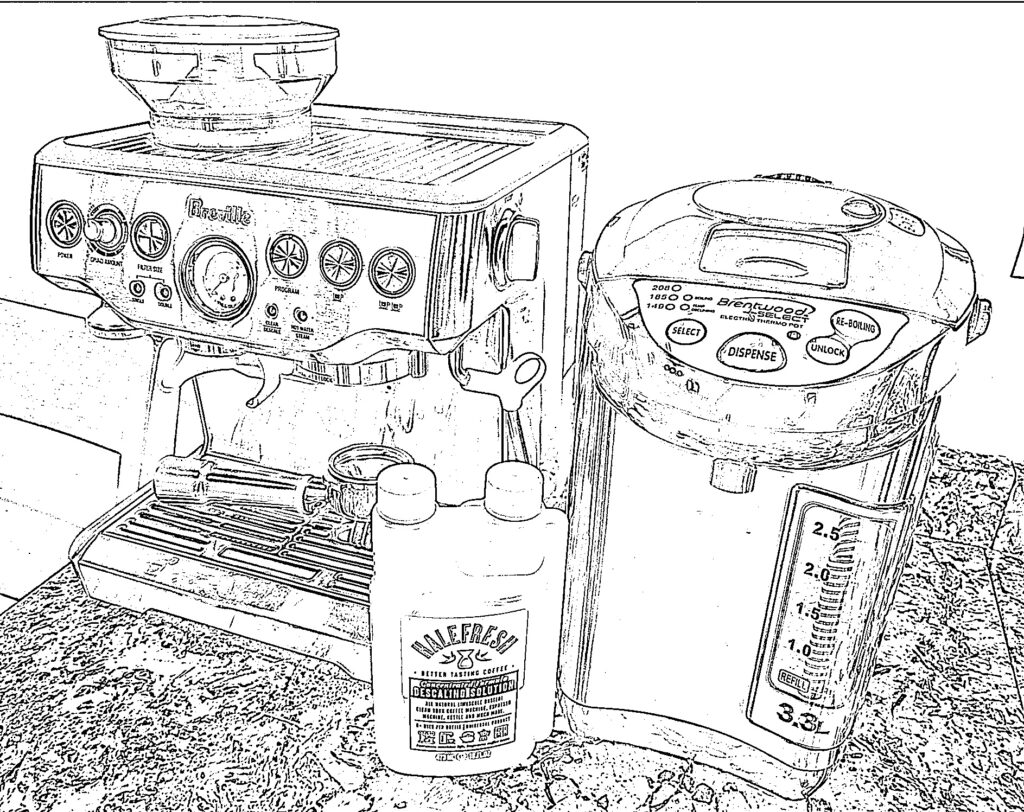
Safety comes first when I’m choosing a descaling solution. A good descaler should clear limescale without damaging any of the surfaces it touches. Citric acid is a great example. It’s natural, chemical-free, safe for regular use, and it doesn’t raise any health concerns, which makes it a popular pick for anyone after an eco-friendly option.
Commercial descalers are purpose-built for coffee machines and can deliver reliable long-term results. The trade-off is cost, since they’re usually pricier than natural alternatives. Value for money matters to me, so I want a descaler that earns its keep on both performance and longevity.
The best descaling solution is the one that fits your machine, your needs, and your budget while keeping everything in top condition. If you want to weigh the options side by side, we break down the commercial-versus-natural trade-offs in more detail elsewhere on Descaling-Solutions.com. Whether you reach for a commercial product or a natural option like citric acid, the real key is descaling regularly and following the manufacturer’s instructions for your specific machine.
Scale is not merely cosmetic. North Dakota State University notes that mineral build-up can slow water heating, affect appliance performance and shorten appliance life.
Citric Acid: A Powerful Natural Descaler
Citric acid is a chelating agent, which means it latches onto minerals and limescale and lifts them away. That makes it an excellent descaler for coffee machines. It occurs naturally in citrus fruits, it’s well known for its cleaning power, and it shows up in everything from cleaning products to drinks. One of its biggest advantages is that it skips the strong odors you get with descaling agents like vinegar.
Citric acid can be mixed into solutions anywhere from 10% to 45% concentration depending on the job. For coffee machines, a modest concentration is plenty to shift mineral deposits without putting the machine at risk. Plenty of people prefer it over vinegar precisely because it doesn’t leave an off taste in the coffee, which makes it a far nicer option for routine maintenance.
Halefresh’s descaler is the option I keep coming back to, and it’s the one we recommend most often here at Descaling-Solutions.com. I find it seriously effective: its natural origins and strong descaling properties make it my top choice for keeping my coffee machines in tip-top shape.
Citric acid is not simply a household workaround. A USDA technical review documents its use as a chelator in cleaning products and for removing scale from processing equipment.
How to Use Citric Acid to Descale Your Coffee Machine
Descaling a coffee machine with citric acid is straightforward and effective. First I prepare the citric acid solution. Then I run the descaling cycle, and finally I rinse the machine thoroughly so no residue remains. That sequence leaves the machine clean, free of mineral buildup, and ready to brew a proper cup.
Every step counts. In the sections below I’ll break the process into three parts: preparing the citric acid solution, running the descaling cycle, and rinsing and final steps. It’s the routine we recommend to readers at Descaling-Solutions.com, and following it keeps your coffee machine in excellent condition and turning out great-tasting coffee.
Preparing the Citric Acid Solution
Mix two tablespoons of citric acid with one liter of hot water to make the descaling solution. Stir it well so the citric acid fully dissolves before you use it. This creates a powerful cleaning solution that pulls mineral deposits out of your coffee machine.
Getting the citric acid to water ratio right is crucial. Too much can be harsh, too little may not do the job, and this simple ratio, the one we point people to at Descaling-Solutions.com, lands the dissolving descaling solution right where you want it.
Running the Descaling Cycle
Pour the citric acid solution into the water reservoir and start the descaling cycle according to the manufacturer’s instructions. For drip coffee makers, let the solution brew about halfway, then switch the machine off so it can sit and work on the mineral buildup.
Make sure the solution reaches every water-contacting part of the machine. That means the water reservoir, the internal tubing, and the brewing path.
Once the descaling cycle is done, run a few cycles with fresh water so no citric acid residue is left behind.
Rinsing and Final Steps
After descaling, rinse the machine several times with clean water to clear out any citric acid residue. This is what keeps your coffee tasting its best and stops leftover residue from affecting the flavor.
Run a plain water cycle to flush out anything that lingers. While you’re at it, clean the coffee grounds container and drip tray too. A thorough rinse protects both the taste of your coffee and the life of the machine.
Comparing Citric Acid to Other Descaling Solutions
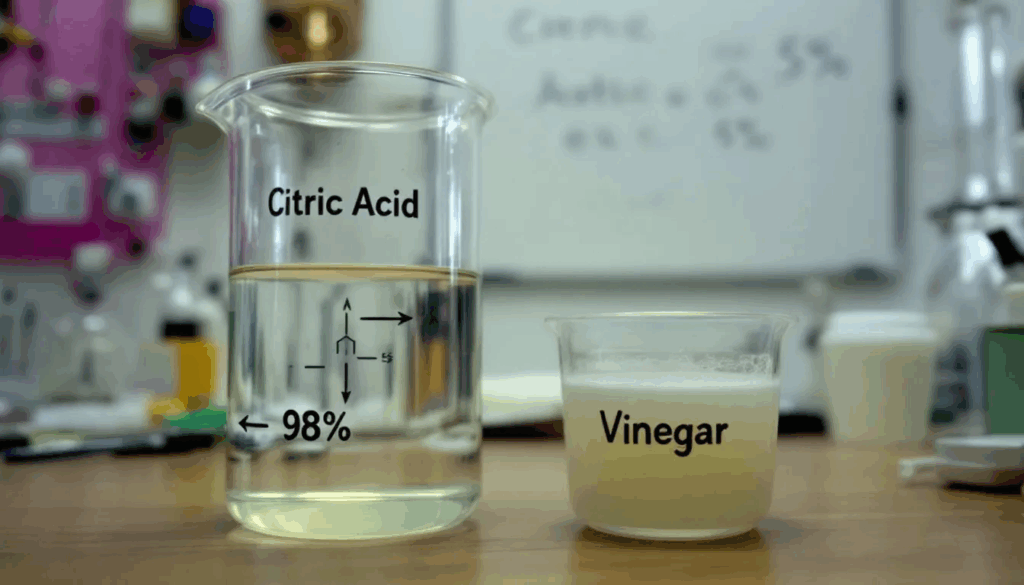
I lean on citric acid because it’s easy to find, easy to use, and inexpensive. Unlike vinegar, which leaves a strong smell and a lingering taste, citric acid has a lower pH and clears out without that hangover. For me that makes it the more pleasant choice every time.
I also find it more effective than plenty of commercial descalers. The commercial options can work well, but they tend to cost more. Citric acid gives me a cost-effective, natural, and efficient way to keep my coffee machine in top shape.
Descaling Specific Coffee Machines

Different coffee machines come with different descaling requirements. For my Nespresso, Keurig, or Ninja Coffee Bar, I always check the manufacturer’s instructions to get the best result. Regular descaling is what keeps these machines performing and lasting by heading off mineral buildup before it takes hold. We’ve put together dedicated walkthroughs for each of these models across Descaling-Solutions.com if you want the machine-by-machine detail spelled out.
In the sections below I’ll walk through descaling these popular machines so you can keep yours in excellent condition and your coffee tasting great.
Nespresso Machines
To descale a Nespresso machine, I mix citric acid with warm water, usually 1 to 2 tablespoons per liter. I pour the solution into the water reservoir and follow the manufacturer’s instructions to run the descaling cycle.
Once that’s done, I run clean water through several times to rinse out any leftover solution. That leaves the Nespresso free of residue and ready to brew.
Keurig Coffee Makers
For a Keurig, I fill the reservoir with the citric acid solution and run several brew cycles without a pod to descale it properly.
Then I rinse thoroughly to clear any residual citric acid before brewing again. That keeps the Keurig in good shape and the coffee tasting clean.
Ninja Coffee Bar
Regular descaling on the Ninja Coffee Bar matters, since mineral buildup hits both the machine’s performance and the quality of the coffee. I start with a solution like citric acid, which I find safe and powerful for this machine.
After descaling, I rinse the machine well with water to remove any residue and leave a clean brewing environment. That keeps the Ninja Coffee Bar performing and the coffee tasting great.
Preventing Mineral Buildup in Your Coffee Machine
Genuine water softening removes the calcium and magnesium responsible for hardness, while some conditioning systems merely inhibit scale formation, as the University of Minnesota’s guide explains.
When I descale my Nespresso and my other coffee and espresso machines with citric acid, the coffee tastes better and the machine lasts longer. I aim to descale every month, or after every 50 brews, the schedule we suggest at Descaling-Solutions.com, to keep things in excellent condition and the coffee at its best.
Common Mistakes to Avoid During the Descaling Process
I avoid bleach altogether, particularly after using an acidic descaler. The CDC’s bleach guidance warns never to combine bleach with other cleaning products.
In my experience, vinegar leaves lingering odors and struggles against limescale in capsule machines. And I make a point of cleaning every removable component, not just the parts I can see, to stop buildup hiding where I’m not looking.
Customer Testimonials on Using Citric Acid for Descaling
One reader mentioned that a simple citric acid solution visibly lifted the scale out of their coffee maker and brought its performance back. Another sets a monthly reminder to descale with citric acid and swears by the routine.
The pattern in these stories is consistent: people get reliable results from citric acid as a natural, cost-effective descaling solution, which is exactly why it keeps coming so highly recommended.
Summary
Regular descaling is, to my mind, essential for keeping a coffee machine performing and lasting. Citric acid is a powerful, natural descaling agent that clears mineral buildup without the harsh chemicals you find in some commercial descalers. Follow the steps in this guide and you can keep your machine in top condition and enjoy great-tasting coffee every time.
Whether you own a Nespresso, Keurig, or Ninja Coffee Bar, regular descaling with citric acid sharpens the flavor of your coffee and extends the life of the machine. I’ve made it part of my regular maintenance routine, and there are plenty more guides across Descaling-Solutions.com whenever you need to check a detail. Stick with it and you’re rewarded with good coffee and a machine that just works.
Frequently Asked Questions
How often should I descale my coffee machine?
I’d descale every month, or after roughly 50 brews, to keep it in top shape. Trust me, you’ll taste the difference.
Can I use citric acid for all types of coffee machines?
Pretty much, yes. Citric acid works well for descaling most machines, including Nespresso, Keurig, and Ninja Coffee Bar. Just follow your machine’s specific cleaning instructions.
What is the correct ratio of citric acid to water for descaling?
Two tablespoons of citric acid to one liter of hot water. It’s simple and it works like a charm.
Why is it important to rinse the machine thoroughly after descaling?
Rinsing well clears out any leftover citric acid, which keeps your coffee tasting great and protects the machine. Don’t skip it.
Can I use vinegar instead of citric acid for descaling?
You can, but it tends to leave a strong smell and affect the taste of your coffee. Citric acid handles the limescale just as well without those downsides.